
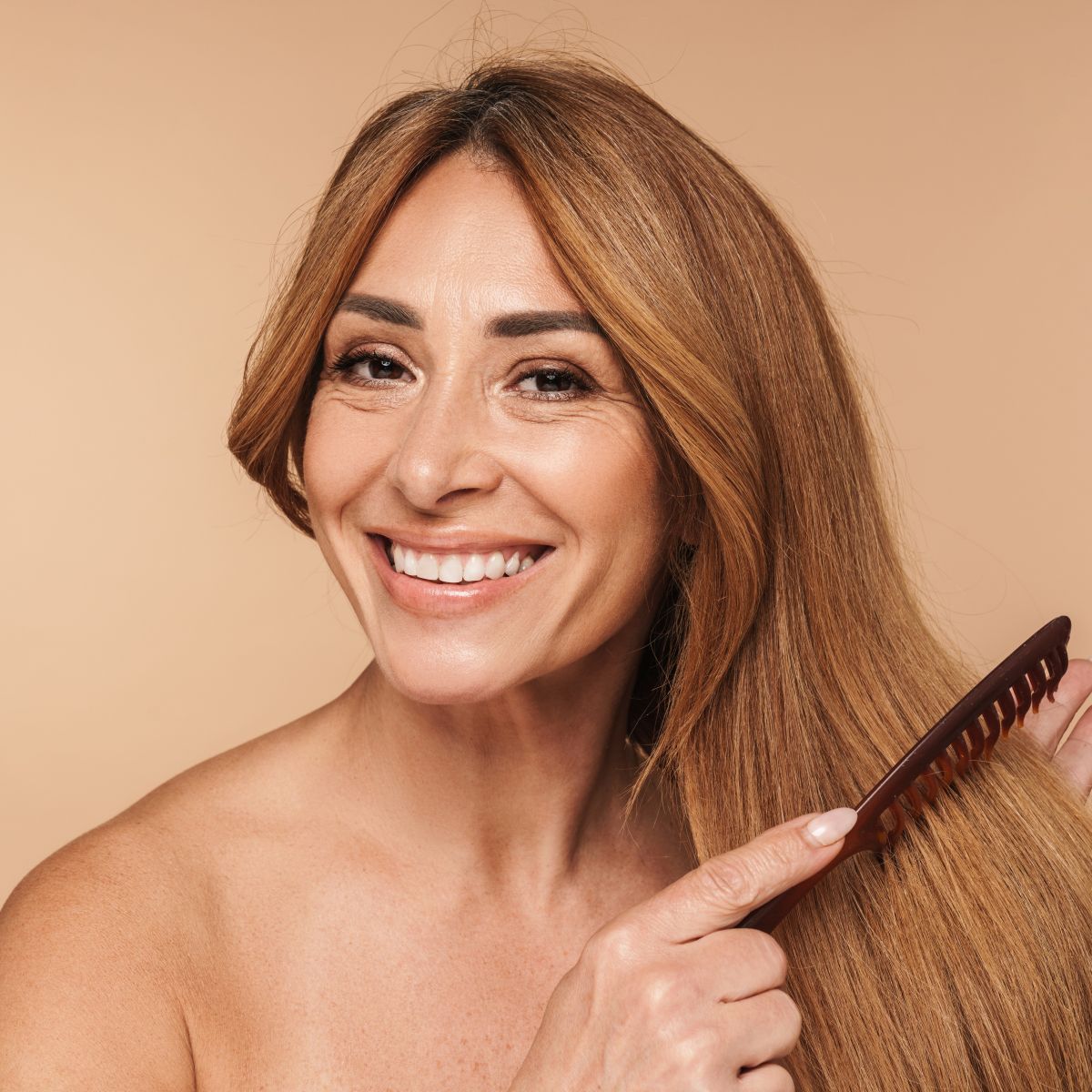
Thinning Hair in Midlife: What’s Actually Going On (And How to Support It)
Introduction: Why Hair Changes in Midlife
Hair changes can feel subtle at first.
You might notice your ponytail feels thinner, your part looks slightly wider or your hair doesn’t hold the same volume it once did. Over time, it can begin to feel flatter, more fragile and less responsive, no matter how you style it.
This is one of the most common concerns for women in midlife, yet it is rarely explained in a way that makes sense or offers real solutions.
Hormonal Changes and Thinning Hair in Midlife
As we move through perimenopause and menopause, estrogen levels begin to decline. This has a direct impact on the hair growth cycle.
Estrogen helps keep hair in its growth phase for longer. When levels drop, hair can begin to grow more slowly, shed more frequently and become finer in texture. This is why hair can feel noticeably thinner over time, even if you are not experiencing dramatic hair loss.
At the same time, changes in hormones can affect the scalp itself, leading to dryness, sensitivity and a less supportive environment for healthy hair growth.

Why the Scalp Is Key to Healthy Hair Growth
Most people focus on the hair they can see, but the real work happens at the scalp.
The condition of your scalp determines how your hair grows, how strong it feels and how well it holds volume. If the scalp is dry, irritated or lacking nourishment, the hair growing from it will reflect that.
This is why simply changing your shampoo or conditioner often doesn’t solve the problem. These products don’t stay on the scalp long enough to create meaningful change.
Supporting scalp health is one of the most effective ways to improve the look and feel of your hair in midlife.
How to Support Thinning Hair Naturally
Instead of chasing quick fixes, the focus should be on creating the right conditions for healthier hair over time.
This includes improving scalp hydration, supporting circulation and delivering nutrients directly to the root of the hair. A targeted approach helps strengthen the hair at its source rather than trying to repair it after the fact.
A well-formulated hair growth serum can play an important role here. By applying it directly to the scalp, you are supporting the area where hair growth actually happens.
Ingredients such as rosemary, biotin and botanical oils help nourish the scalp, improve its condition and support stronger, healthier-looking hair over time. With consistent use, the scalp becomes more balanced, which allows the hair to grow in a way that appears fuller and more resilient.

What to Expect When Supporting Hair in Midlife
It is important to approach this with realistic expectations.
Hair does not change overnight, and improvements take time. However, with consistent care, you may begin to notice that your hair feels stronger, looks healthier and behaves better overall.
Over time, this can lead to hair that appears fuller, holds volume more easily and feels less fragile than before.
The key is consistency and supporting the scalp rather than constantly switching products or chasing instant results.
The Bottom Line
Thinning hair in midlife is not a failure or something you have caused. It is a natural response to hormonal changes happening within the body.
When you understand what is driving those changes, you can start supporting your hair in a way that actually makes a difference. By focusing on scalp health and using targeted treatments, you give your hair the best possible chance to look and feel stronger, healthier and more like itself again.




发表评论
此站点受 hCaptcha 保护,并且 hCaptcha 隐私政策和服务条款适用。